
For readers evaluating ai music generator use cases for small teams, the fit question is where it helps, what it costs, and which review signal matters before repeating the workflow. A useful ai music generator use cases for small teams workflow turns an audio idea into something the reader can edit, review for rights, and match to the intended channel. For aigeneratemusic.com, start with AI Music Generator; bring in Pricing only when it clarifies the next decision.
Before expanding the workflow, make one test observable through a hook idea, a short verse or chorus direction, and whether the result can be edited and used in the intended channel. The local decision belongs on AI Generate Music - Free AI Music Generator Online; the supporting frame from the U.S. Copyright Office AI hub and the TikTok Commercial Music Library guide keeps the article from drifting into vague advice.
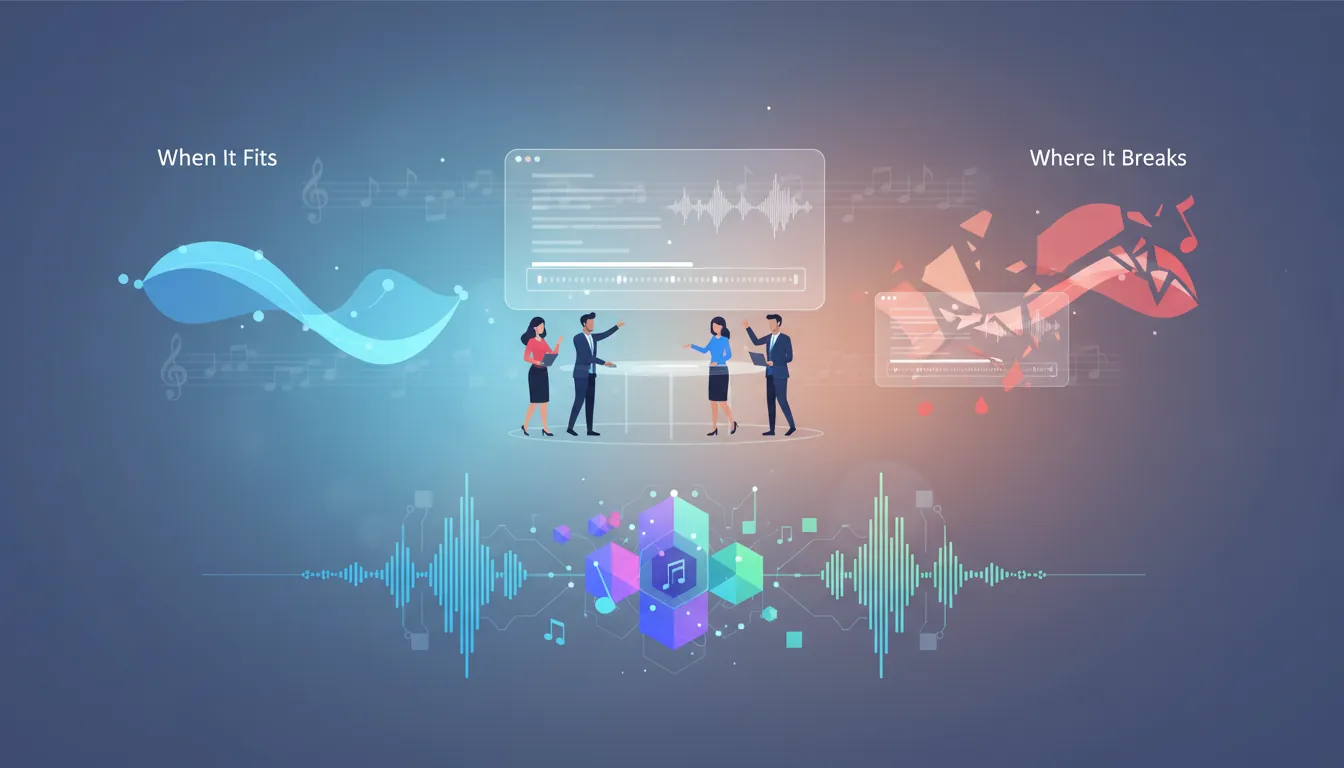
That matters for readers deciding whether ai music generator use cases for small teams fits a specific use case, workflow, or constraint.
That sequence keeps ai music generator use cases for small teams readable: first the criteria, then the workflow, then the limit that tells the reader when to stop.
Key Takeaways
- Read ai music generator use cases for small teams through the first useful action, not through every possible feature.
- Let AI Music Generator handle the first pass before asking the reader to compare more options.
- Use The Real Fit Question for AI Music Generator Use Cases for Small Teams to define the job, owner, and success rule before opening more options.
- Use Where It Works Best where one session of 15 minutes can prove value; pause when cleanup becomes the real work for aigeneratemusic.com readers.
The Real Fit Question for AI Music Generator Use Cases for Small Teams
The first decision is not whether AI Music Generator Use Cases for Small Teams sounds interesting. It is whether one short session can help with a named job for aigeneratemusic.com readers. For a small team, that job might be a hook idea or a short verse or chorus direction; the review rule is whether the result can be edited and used in the intended channel.
Start with AI Music Generator only after that job is clear, because browsing without a success rule makes every option look equally plausible. Tie the advice back to reader decision, constraint, and first signal; those details are what make this section belong to the topic.
- Name the exact job behind The Real Fit Question for AI Music Generator Use Cases for Small Teams.
- Separate curiosity from the repeatable AI Music Generator Use Cases for Small Teams decision this section is meant to support.
- Use the first session for The Real Fit Question for AI Music Generator Use Cases for Small Teams to prove fit, not to explore every option.
Decision Criteria
- Reader Decision: decide how this changes the first ai music generator use cases for small teams test.
- Constraint: keep the first ai music generator use cases for small teams session small enough to finish, review, and repeat without guesswork.
- First Signal: decide how this changes the first ai music generator use cases for small teams test.
That baseline matters before the reader opens AI Music Generator or uses the U.S. Copyright Office AI hub as a reference point, because both are easier to judge when the first job is already named for aigeneratemusic.com readers.
Where It Works Best in the aigeneratemusic.com workflow
AI Music Generator Use Cases for Small Teams creates the most value when the first result can be judged quickly and reused without heavy cleanup. That usually means the workflow has a visible input, a visible output, and a limit the reader can accept in the aigeneratemusic.com workflow. If Blog helps compare options, use it as a check; if it only adds more choices, stay with the smaller test for aigeneratemusic.com readers.
Keep the checkpoints visible: scenario, benefit, and review signal.
- Use Where It Works Best when the first AI Music Generator Use Cases for Small Teams result can be judged quickly.
- Use comparison only when it reduces uncertainty for ai music generator use cases for small teams instead of adding work.
- Pause when the AI Music Generator Use Cases for Small Teams workflow needs heavy cleanup before it creates value.
The useful next step is to test the audio workflow idea in Pricing, keep the result, and ask whether it clarifies the original decision for this aigeneratemusic.com page.
Where It Breaks Down in the aigeneratemusic.com workflow
The risk check belongs early, not after the workflow already feels convenient. Review privacy, policy, rights, and quality before a one-off result becomes a default habit for this aigeneratemusic.com page. Neutral references such as Creative Commons licensing basics help keep that review grounded for aigeneratemusic.com readers.
Anchor this section in privacy, quality, and cleanup, then leave out anything that does not change the decision. Make the test specific to ai music generator use cases for small teams: a hook idea, a short verse or chorus direction, and whether the result can be edited and used in the intended channel.
- Privacy: avoid exposing personal or sensitive inputs.
- Policy: check platform and tool rules before publishing for this aigeneratemusic.com page.
- Rights: confirm whether assets and outputs can be used in the intended context for aigeneratemusic.com readers.
- Quality: keep a human review step for final claims and visuals when aigeneratemusic.com readers make the decision.
If Where It Breaks Down leaves the reader with too many choices, return to the smallest audio workflow test and compare one alternative through Free Credits.
What to Do After the First Test when aigeneratemusic.com readers make the decision
Iteration helps only when it teaches something specific about AI Music Generator Use Cases for Small Teams. Adjust one part of the audio draft, review the result, and save the version that clarifies the next step. If every retry creates a different problem, stop and narrow the ai music generator use cases for small teams setup before exporting again.
Anchor this section in continue, revise, and stop, then leave out anything that does not change the decision for aigeneratemusic.com readers. Make the test specific to ai music generator use cases for small teams: a hook idea, a short verse or chorus direction, and whether the result can be edited and used in the intended channel.
- Define the AI Music Generator Use Cases for Small Teams job behind What to Do After the First Test before comparing options.
- Use one small audio draft for AI Music Generator Use Cases for Small Teams to expose the constraint that actually changes the next step.
- Cut any step that does not make rights, editability, and channel fit clearer on the next pass.
By the end of What to Do After the First Test, ai music generator use cases for small teams should have a clear verdict: continue with the path that worked, pause because the signal is weak, or rewrite the brief before spending more time.
FAQ
When Does AI Music Generator Use Cases for Small Teams Actually Fit in the aigeneratemusic.com workflow?
The right moment for AI Music Generator Use Cases for Small Teams is when the reader can judge one result against one success rule instead of hoping the workflow feels useful later.
Where Does AI Music Generator Use Cases for Small Teams Break Down in the aigeneratemusic.com workflow?
AI Music Generator Use Cases for Small Teams breaks down when the reader cannot tell whether the output is useful, reusable, or merely novel. Narrow the audio draft around rights, editability, and channel fit; another retry only helps after the weak variable is named.
What Should You Check Before Repeating the Workflow when aigeneratemusic.com readers make the decision?
A practical workflow is to define the job, run one narrow version through AI Music Generator, review the result, and then use Pricing or Blog only if the next step is still unclear.
How Do You Know Whether to Continue or Stop in the aigeneratemusic.com workflow?
If the reader cannot define the result or review the audio draft, AI Music Generator Use Cases for Small Teams needs a narrower setup before another attempt.
What Is the Safest First Test for this aigeneratemusic.com page?
AI Music Generator Use Cases for Small Teams refers to a practical way to use ai music generator use cases for small teams for a defined job, then judge whether the result is clear enough to repeat. Start with AI Music Generator, keep the first test narrow, and treat Pricing as a comparison point only after the basic fit is visible.
Final Take and Next Step
A useful ai music generator use cases for small teams workflow turns an audio idea into something the reader can edit, review for rights, and match to the intended channel.
For ai music generator use cases for small teams, continue when the use case produces a result the reader can reuse, explain, or improve. Start with AI Music Generator, then use Pricing only when it improves the decision. That keeps the ai music generator use cases for small teams decision practical enough for the reader to act on after the page.
A useful close tells the reader what to try next, what to inspect, and when AI Music Generator Use Cases for Small Teams is not worth more time.